How ATC in VATSIM is different from ATC in the real
world
Understanding the ATC structure
Connecting with ATC
What you and ATC say on the radio
How to make your aircraft identifiable on the ATC
radar screens
The Fun of Flying
There is no doubt that flying is fun. That’s true in the real world, but it’s also true when you’re just flying a computer in your room. Whether you are using one of Microsoft’s flight simulators or a product from one of the many other sim providers, you are likely to find that flying can become quite addictive.
But if there is one single thing which takes that enjoyment even further, bringing it even closer to the real world experience, it’s having access to a live Air Traffic Control service. VATSIM provides that service, thanks to those of our members who have trained in ATC.
The Role of ATC
Air Traffic Control (ATC) is a service provided to pilots to prevent collisions between aircraft and to expedite flights while maintaining an orderly flow of traffic.
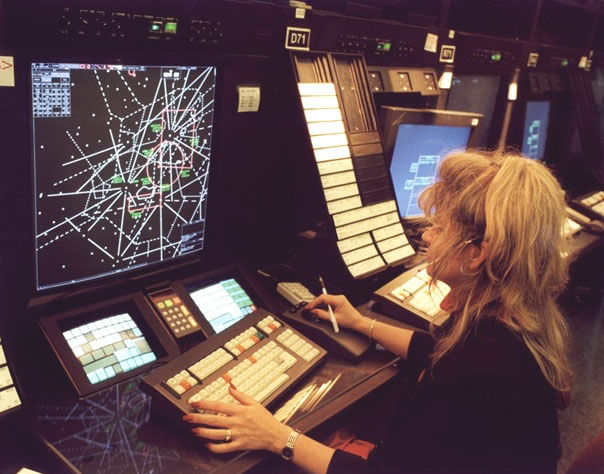
An ATC Officer at work
When you want to fly, you first file a flight plan with ATC as you have already learned, and then you contact ATC by radio in order to proceed with your flight.
You need to contact ATC for several reasons: firstly you must get clearance to fly your intended route, then you have to get clearance to taxi to the appropriate runway, then clearance to take off, then clearance to proceed in the flight after takeoff. A similar set of requirements ensure that you get back down again safely!
After your initial contact with ATC you will be told who to contact next, because there will be several stages of control involved in your flight. At each stage, ATC will probably apply restrictions on the movement of your aircraft as necessary, to ensure adequate separation from other aircraft under their control. These restrictions can be in your location, altitude, speed or direction or any combination of these. That means that you will get instructions from ATC, which you must obey, and which you also must read back so that ATC knows that you have fully received the instruction.
Safety is of utmost importance in the real world, and we simulate that here on VATSIM by adhering to the procedures, phraseology and structures that apply in the real world.